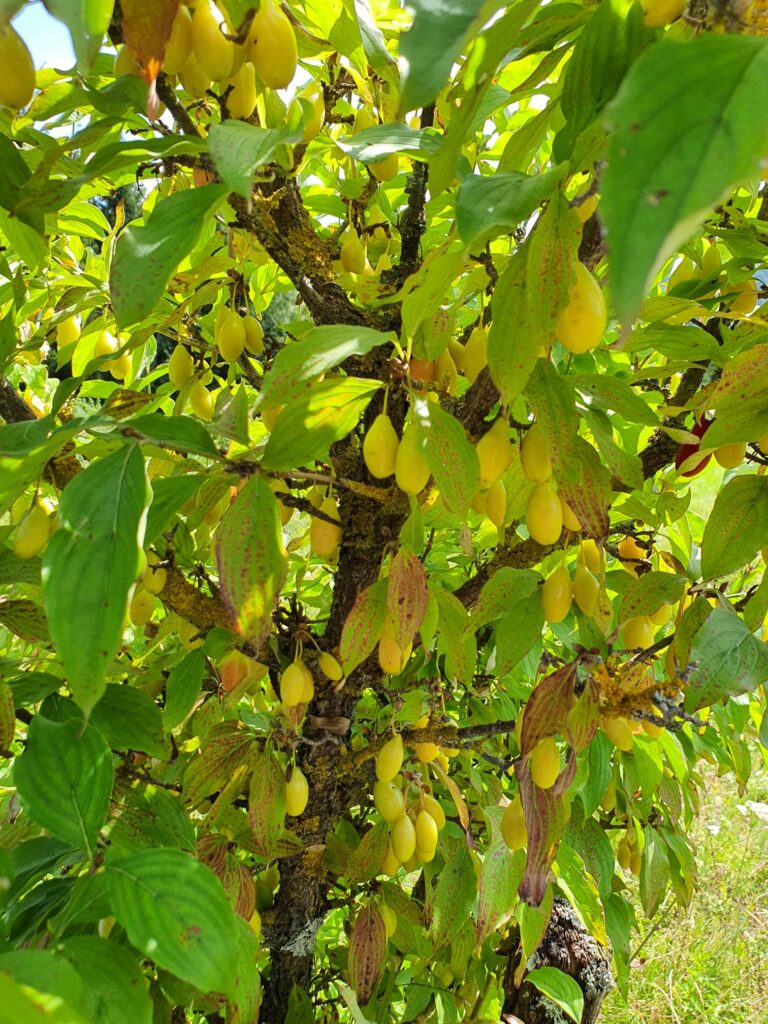

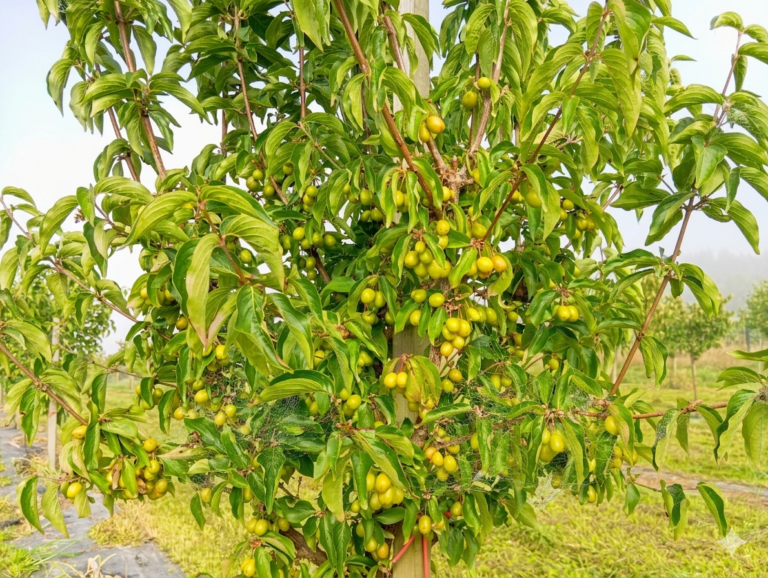
Cornelian cherry has long been part of the landscape of Podkarpacie. It is a resilient, long-lived plant and a distinctive feature of the region. It used to grow near manor houses, in village homesteads and along field boundaries. It was also common in manor orchards and monastery gardens. Even today, one can find trees over a hundred years old, still bearing fruit as if reminding us of times past.
Podkarpacie has proven to be an ideal environment for cornelian cherry — not only because of tradition, but above all due to natural conditions that give the fruit its unique flavor and aroma. The fruit ripens late, often as late as October, and the region’s warmer and sunnier autumns, compared to central Poland, allow it to fully mature and develop a deep color. As a result, the fruit is more aromatic, less astringent and naturally sweeter.
Fermenting cornelian cherry is one of the oldest methods of processing it. The process resembles pickling cucumbers, but the result is entirely different: the fruit becomes firm, slightly sparkling, with a complex, tangy-fruity flavor. In Podkarpacie, a unique method has developed over generations — using locally grown fruit that is not fully ripe. This results in a distinctive product known as “pickled cornelian cherry from Podkarpacie.”
Cornelian cherry appears in Polish sources as early as the Middle Ages, but it is Podkarpacie that became its true stronghold. The region has long been known for its diversity of fruit varieties, and cornelian cherry fits perfectly into this tradition.
In Podkarpacie, fermenting cornelian cherry was more than just a culinary practice — it was a ritual that connected generations. In many households, it is still said that:
“we don’t ferment for taste, but for peace at home.”
Local stories and legends often refer to this tradition. One example is the tale of Katarzyna, a herbalist from Dynów in Podkarpacie, who was said to heal “broken hearts” with cornelian cherry infusions. When someone suffered, she would give them fruit to ferment, saying:
“Fermentation teaches patience, and patience heals everything.”
Fermented cornelian cherry became so popular in the region that it even gained an alternative name — “Polish olives.”
Local sayings highlight several key themes: its resemblance to olives, its status as a refined product of manor cuisine, its perceived health benefits, and its role in bringing harmony to everyday life.
Pickled cornelian cherry from Podkarpacie is more than just a unique culinary product. It is a symbol of resilience, tradition, local identity and harmony with nature. It is a fruit shaped by climate, history and human memory.
Today, it is making a comeback as an ambassador of Podkarpacie — a region that successfully combines tradition with modernity.
👉 It’s definitely something worth trying 😊